Quick Answer
Yes, biotin may contribute to acne in some individuals, specifically those who are already acne-prone, but the current scientific evidence does not prove that biotin directly causes acne. Most concerns involve high-dose oral biotin supplements, especially Hair, Skin & Nails formulas, rather than biotin naturally found in foods or topical products. At Natural Acne Clinic, biotin is one of the supplements we routinely evaluate because we’ve seen many clients experience worsening breakouts after starting biotin supplements. Acne is complex, so biotin is rarely the only contributing factor.¹²
Key Takeaways
- Biotin has not been scientifically proven to directly cause acne, but it may contribute to breakouts in susceptible individuals.¹²
- High-dose Hair, Skin & Nails supplements are the most common source of concern.
- Improvement after stopping biotin may take several weeks because acne develops over approximately a 90-day cycle.
- Biotin can also be found in multivitamins, prenatal vitamins, protein powders, collagen supplements, and some foods.
- Acne is usually caused by multiple factors, not just one supplement.
What the Research Says
The relationship between biotin and acne remains an area of ongoing research. At this time, there are no large clinical trials demonstrating that biotin directly causes acne, and most evidence comes from case reports, biological theories, and clinical observations rather than high-quality randomized studies.¹
One commonly proposed explanation is that very high doses of biotin may compete with pantothenic acid (vitamin B5) for absorption or metabolism. Because vitamin B5 has been studied for its role in supporting normal skin barrier function and keratinocyte differentiation, some researchers have hypothesized that excessive biotin intake could indirectly contribute to acne in susceptible individuals. However, this mechanism has not been definitively proven, and more research is needed.¹³
The current scientific consensus is that while biotin cannot be definitively blamed as an acne trigger, it remains reasonable to evaluate high-dose supplementation in acne-prone individuals, particularly if breakouts began or worsened after starting a new supplement.¹²
What We See in Practice
After helping thousands of acne clients over more than 12 years, biotin is one of the supplements we routinely review during an initial consultation.
One of the most common situations we see is someone beginning a Hair, Skin & Nails supplement because they’re frustrated with acne or other skin concerns. If a supplement is marketed specifically for healthier skin, most people naturally assume it will help.
However, acne-prone skin behaves differently.
One of the underlying characteristics of acne is a genetic tendency toward retention hyperkeratosis, meaning skin cells shed abnormally and become trapped inside the pore instead of shedding normally. This microscopic blockage, called a microcomedone, is the beginning of every acne lesion.
Although research has not proven that biotin accelerates this process, we often explain it to clients this way: if someone already has a genetic tendency to overproduce or improperly shed skin cells, adding biotin may, in some susceptible individuals, be similar to adding fuel to an existing fire.
Our goal is to identify every possible contributor, including skincare products, pore-clogging ingredients, hormones, diet, medications, stress, supplements, and lifestyle factors, so we can help clients achieve clear skin as efficiently as possible.
Why Biotin May Trigger Acne
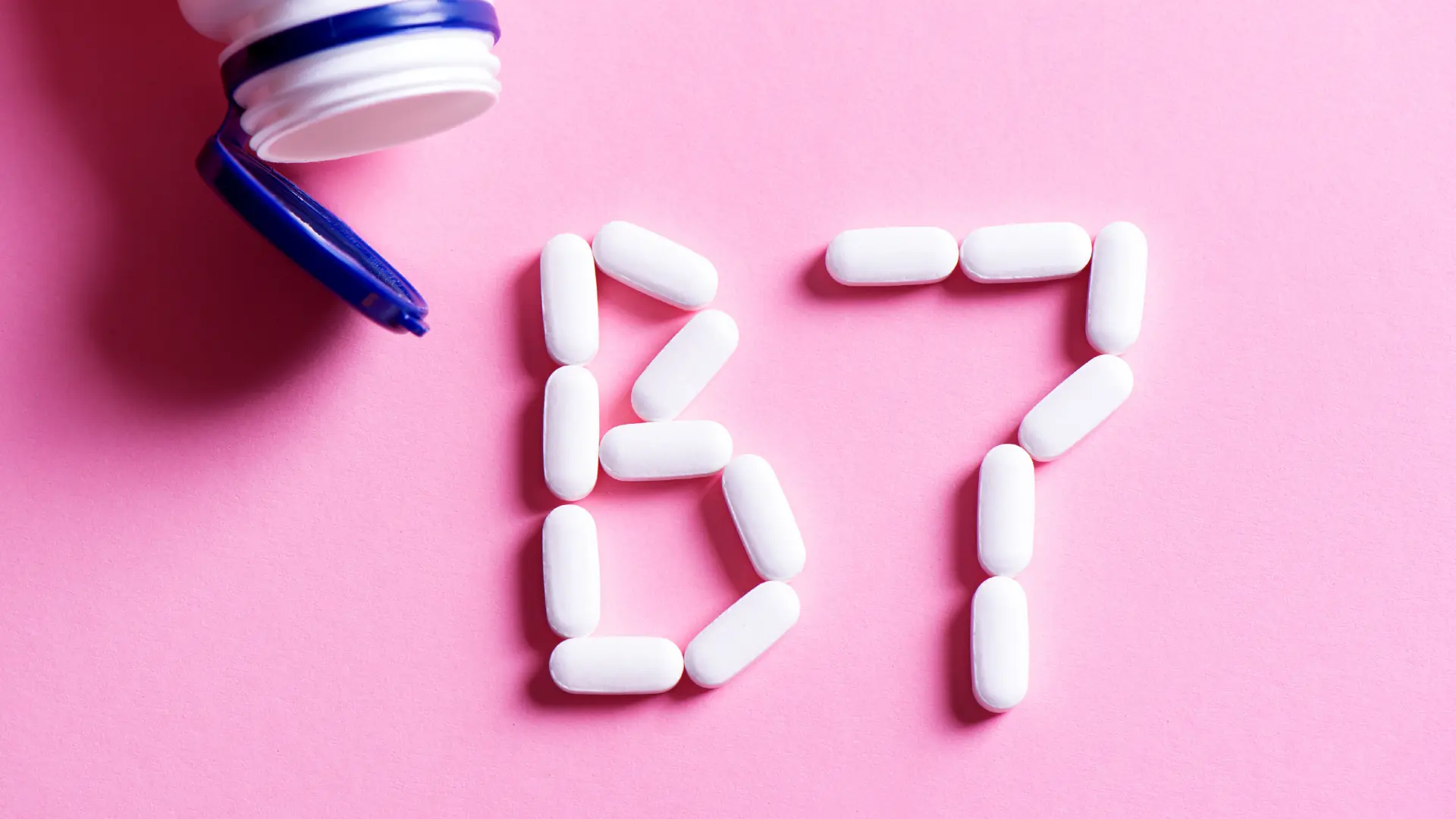
Biotin (vitamin B7) plays an essential role in normal energy metabolism and healthy cell function. It is an important nutrient, and true biotin deficiency is rare.²
The concern isn’t biotin itself. The concern is large supplemental doses in people who are already genetically predisposed to acne.
Many Hair, Skin & Nails supplements contain 5,000-10,000 mcg (5-10 mg) of biotin, which is dramatically higher than the amount typically required to meet normal nutritional needs.²
Researchers have proposed that these large doses may interfere with vitamin B5 metabolism or otherwise influence processes involved in skin cell turnover and oil production. While these theories are biologically plausible, they have not yet been confirmed in human clinical trials.¹
For this reason, we view biotin as a potential contributing factor, not a proven cause.
Why Hair, Skin & Nails Supplements Can Be Problematic
Hair, Skin & Nails supplements are by far the most common source of excessive biotin intake that we encounter.
Many people begin taking these supplements hoping to improve their complexion, hair growth, or nail strength. Unfortunately, for someone with acne-prone skin, they may not always have the intended effect.
If you’re struggling with persistent acne, it’s worth reviewing the ingredient label rather than assuming the supplement is automatically helping your skin simply because of its name.
Why You May Not Notice Changes Right Away
Even if biotin is contributing to your acne, stopping it won’t usually produce overnight results.
Acne develops beneath the surface of the skin long before a blemish becomes visible. At Natural Acne Clinic, we teach clients about the 90-day acne cycle. Every pimple begins as a microscopic clogged pore called a microcomedone, which can take weeks to months to become visible.
That means the breakouts you’re seeing today may have actually started developing long before you noticed them.
Likewise, if you discontinue a high-dose biotin supplement, your skin may continue breaking out for several weeks while existing clogged pores complete their normal life cycle.
Patience is important when evaluating whether any dietary or supplement change is making a difference.
Hidden Sources of Biotin
Many people don’t realize how many products contain biotin.
Common sources include:
• Hair, Skin & Nails supplements
• Stand-alone biotin supplements
• Daily multivitamins
• Prenatal vitamins
• Protein powders
• Collagen supplements
• Fortified nutrition products
• Foods that naturally contain biotin, including egg yolks
Does Topical Biotin Cause Acne?
Most concerns surrounding biotin and acne involve oral supplements, not shampoos, conditioners, or skincare products that contain biotin.
Currently, there is very little evidence suggesting that topical biotin contributes to acne in the same way high-dose oral supplementation may. If you’re evaluating potential acne triggers, oral supplements are generally the first place to look.
Common Misconceptions
Myth: Biotin causes acne in everyone.
Reality: Most people who take biotin never develop acne. Individual susceptibility & genetic predisposition play a significant role.
Myth: More biotin is always better for your skin.
Reality: More isn’t always better. Unless you have a true deficiency or another medical indication, higher doses have not consistently been shown to provide additional benefits for healthy individuals.²
Myth: If I stop biotin, my acne will disappear overnight.
Reality: Acne develops gradually. Even if biotin is contributing, improvements may take weeks because of the skin’s natural acne cycle.
Myth: Biotin is the only reason I’m breaking out.
Reality: Acne is almost always multifactorial. Hormones, genetics, skincare products, stress, diet, medications, and other supplements often play important roles as well.
What We Recommend
If you’re struggling with acne and are taking a biotin supplement, especially one marketed for hair, skin, and nails, it’s worth considering whether it could be contributing to your breakouts.
We’ve found that particularly sensitive acne-prone individuals may also benefit from reviewing other sources of biotin, including multivitamins, prenatal vitamins, protein powders, collagen supplements, and even foods naturally rich in biotin, such as egg yolks.
Rather than focusing on biotin alone, we believe it’s more effective to evaluate the entire picture. Acne is a complex condition influenced by genetics, hormones, pore-clogging ingredients, diet, medications, stress, and supplements. Our goal is to identify every potential contributor so we can eliminate unnecessary variables, establish a clean baseline, and help clients achieve clear skin as efficiently as possible.
If you think biotin may be affecting your skin, don’t stop a supplement that has been recommended by your physician without discussing it with them first. The information in this article is intended for educational purposes and should not replace personalized medical advice.
Need Help Identifying Your Acne Triggers?
Figuring out what’s causing persistent acne can be frustrating, especially when multiple factors are involved. Our acne specialists take a comprehensive approach, evaluating your skincare routine, supplements, diet, hormones, medications, lifestyle, and other potential contributors to create a personalized plan designed to help you achieve clear skin.
References
- Lipner SR. Rethinking biotin therapy for hair, nail, and skin disorders. Journal of the American Academy of Dermatology. 2018.
- Patel DP, Swink SM, Castelo-Soccio L. A Review of the Use of Biotin for Hair Loss. Skin Appendage Disorders. 2017.
- Shields A, et al. Safety and Effectiveness of Oral Nutraceuticals for Treating Acne. Dermatology Online Review. 2023.